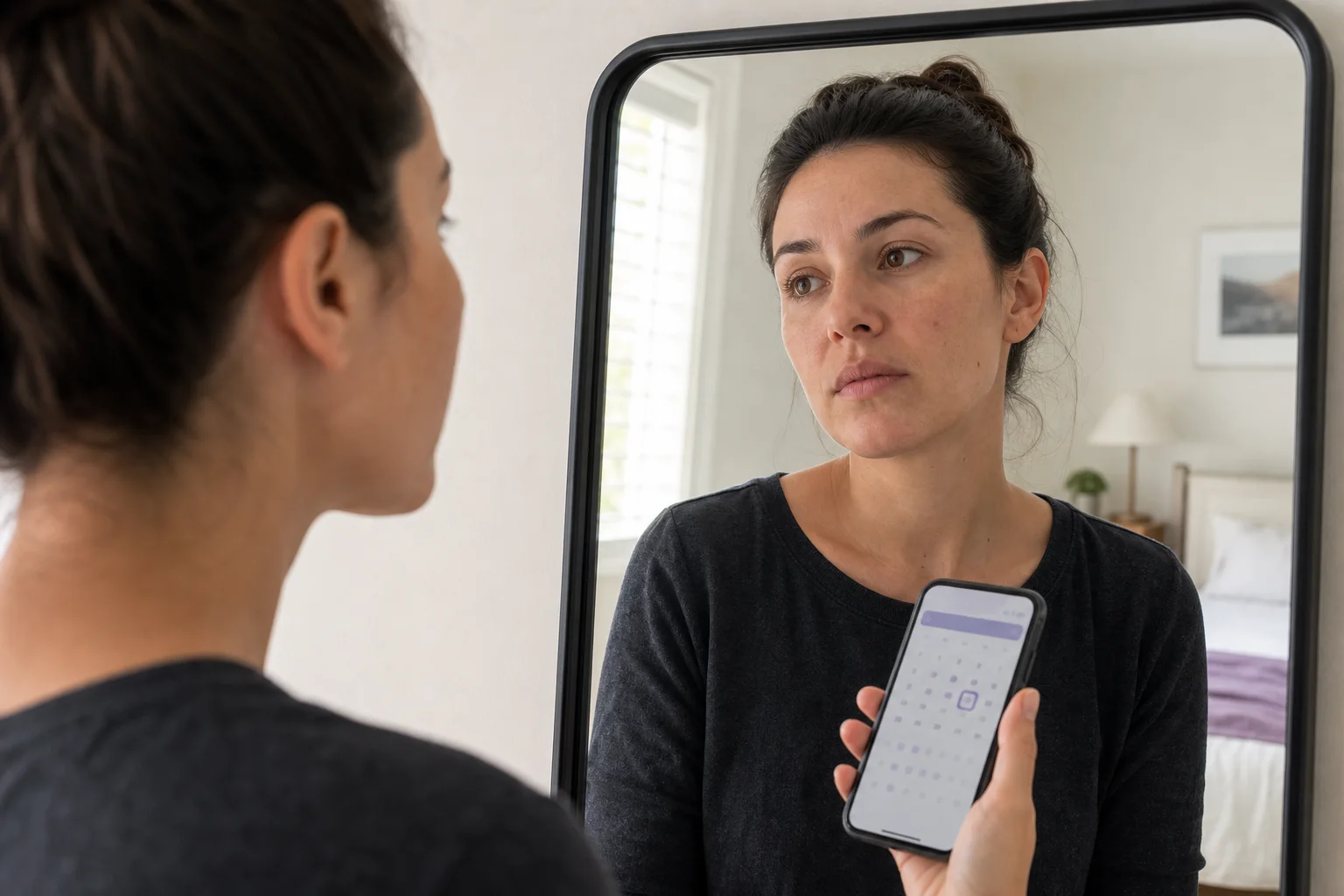
Dryness, tightness and stinging can make rosacea care difficult. They can also have more than one cause. Calling every reaction a damaged barrier does not tell you whether the problem is rosacea, a product reaction, another condition or a mixture.
This guide offers a simple framework for comfortable daily care alongside your treatment plan. No routine or ingredient can guarantee that your skin will not react.
At a Glance
- Keep the basics: Gentle cleansing, moisturizer and sun protection.
- Check the cause: Persistent or worsening symptoms deserve assessment.
- Separate medicines from extras: Ask your prescriber about treatment changes; avoid adding optional irritating products.
- Judge the whole formula: An ingredient name does not guarantee comfort.
- Skip the deadline: There is no fixed recovery time or automatic date to restart a product.
Start here: Skin Barrier & Sensitivity Hub.
A Short Symptom Check for Your Appointment
Write down which statements describe your experience. This is a discussion aid; it cannot diagnose barrier damage or a rosacea flare.
- Products that felt comfortable now sting.
- Dryness, tightness or peeling appeared after a routine change.
- Redness, bumps or discomfort are increasing.
- Symptoms occur even when you have not applied a product.
- A prescribed medicine has become hard to use as directed.
- Your eyes feel painful, red, gritty or unusually sensitive to light.
Include the timing, product names and any photographs that help explain the change. Do not use a recent product change as proof that it is the only cause. If symptoms are significant or worsening, arrange care rather than waiting to finish a home reset.
Step 1: Cleanse Without Scrubbing
Use a gentle cleanser that feels comfortable and follow its directions. Avoid rough washcloths, cleansing brushes and exfoliating scrubs on irritated skin. Lukewarm water and light fingertip application may be easier to tolerate than heat and friction. The AAD rosacea skin-care guide explains this gentle approach.
Choose by how the complete product performs, not by foam alone. “Cream,” “gel,” “micellar” and “sulfate-free” are descriptions, not guarantees. A product intended to be rinsed off should not be left on because another routine calls it gentle.
Ask these practical questions:
- Does it remove the products I actually wear without repeated rubbing?
- Does washing leave persistent burning, tightness or redness?
- Am I adding a second cleanser because I need it, or only because a routine chart lists it?
If even water or a mild cleanser burns, tell your clinician. More cleansing is not a test of how clean your skin can become.
Step 2: Choose a Comfortable Moisturizer
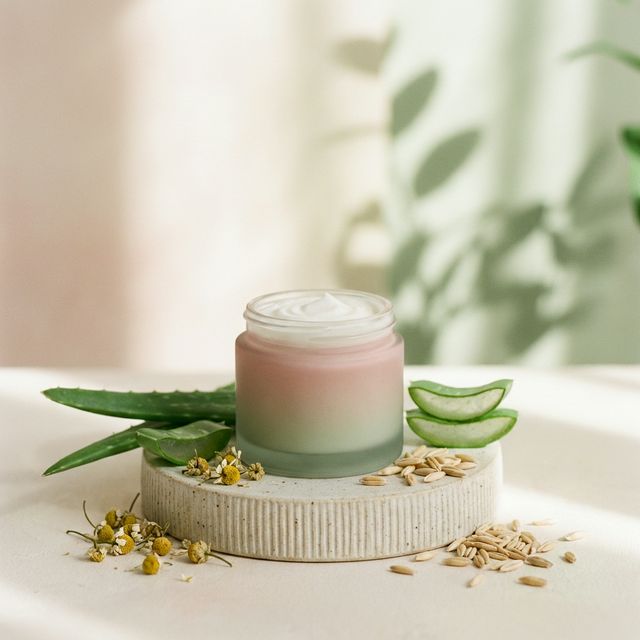
A moisturizer can support comfort when skin feels dry. Choose a fragrance-free formula you tolerate, and ask where it belongs around any medicine. Applying many repair products together makes it harder to understand a reaction.
| Ingredient on the label | A useful question |
|---|---|
| Ceramides | Does the complete moisturizer feel comfortable for me? |
| Niacinamide | Is this already in a product I use, and do I need another serum? |
| Panthenol | Am I choosing the formula for a clear purpose rather than a healing promise? |
| Squalane | Does this extra emollient add useful comfort or just another layer? |
| Centella / cica | Have I considered that botanical ingredients can also cause reactions? |
None is compulsory, and no percentage establishes tolerance for everyone. If a cosmetic product causes a reaction, stop using it and seek advice when symptoms persist or are severe. The AAD product-testing guide explains testing new cosmetics and when professional assessment may be needed.
Do not automatically add a thick ointment over a prescription medicine. Ask whether occlusion fits that medicine and the area being treated.
Step 3: Keep Sun Protection in the Plan
Choose a broad-spectrum sunscreen with SPF 30 or higher that you can use as directed. Shade, a hat and protective clothing also help. Zinc oxide or titanium dioxide formulas are options to discuss if sunscreen stings, but the whole formula and your response matter. No filter category guarantees that every product will feel comfortable.
Use the labelled amount and reapplication instructions. Tint may change appearance; it does not justify applying less. If you cannot find a tolerable sunscreen, ask for help choosing one and use shade and clothing to reduce exposure while you seek advice.
Related: Sunscreen Choices for Rosacea.
An AM/PM Planning Example
These cards organize care. They do not override a medicine label or prescribe the same order for every product.
Morning
- Cleanse gently according to your needs and product directions.
- Fit prescribed treatment where its instructions specify.
- Use a moisturizer you tolerate.
- Apply sunscreen as directed before exposure, with shade and protective clothing.
Evening
- Gently remove sunscreen and makeup.
- Follow the instructions for any evening medicine.
- Use your comfortable moisturizer in the appropriate order.
- Leave out optional extras that add irritation or no clear benefit.
What to Pause, and What to Ask About
Optional scrubs, exfoliating acids and new serums can wait while you are trying to understand irritation. You do not need to fill every routine slot.
Prescribed azelaic acid, metronidazole, ivermectin, a retinoid or another medicine is a separate decision. Follow its reaction warnings and contact the prescriber about stopping, changing or restarting. Do not assume all medicines must stop together, or that one medicine is always gentle enough to continue.
Bring the label and explain what happens after application. Ask for a written plan if you are unsure which instruction applies.
How to Judge Progress
There is no fixed recovery time. Record comfort, dryness, redness, bumps and whether daily care is easier to follow. A quieter day is useful information, but it does not prove that the cause has resolved or that every previous product is safe to restart.
At review, ask:
- Which symptom are we trying to improve first?
- Is the diagnosis still clear?
- Could a product or medicine need adjustment?
- What should I do if the same reaction returns?
- Which changes require contacting you sooner?
Common Mistakes
- Buying several “repair” products at once. Keep changes traceable and their purpose clear.
- Calling every sensation barrier damage. Record what happens and ask about persistent symptoms.
- Stopping prescribed care for a fixed reset. Follow warnings and get product-specific advice.
- Restarting after a set number of symptom-free days. Discuss the product that caused the problem first.
- Using sunscreen too sparingly because it stings. Seek a tolerable alternative and plan other sun protection.
FAQ
Can I treat redness while caring for dry or irritated skin?
Discuss both concerns together. Basic care and prescribed treatment can be planned together; a general article should not tell you to leave rosacea untreated until a supposed barrier deadline.
When can I restart azelaic acid?
Ask the prescriber or pharmacist about the exact product, previous reaction and current symptoms. There is no universal symptom-free interval or restart frequency. Read Starting Azelaic Acid for Rosacea.
What if a “sensitive skin” moisturizer burns?
The label is not a guarantee. Stop an optional product that causes a reaction and seek advice for severe or persistent symptoms. Do not keep buying stronger repair products to compensate.
When should I seek care?
Arrange assessment for persistent or worsening symptoms. Seek urgent medical care for eye pain, blurred vision, light sensitivity, or red or gritty eyes with rosacea. NHS guidance explains these eye warnings. Difficulty breathing or swelling of the lips, tongue or throat requires emergency help.
Keep Your Notes Together
Start a skin scan to record visible changes and organize routine notes. A scan cannot diagnose a damaged barrier, determine which medicine to stop or guarantee a flare-free routine.
Related Guides
General education, not a diagnosis or personal treatment plan. Follow your local product label and professional advice for your circumstances.