Your guide to healthy skin
Evidence-based guides for every skin concern—from rosacea to acne scars to building the right routine. Learn what works, avoid common mistakes.
Quick Answers
Common skincare questions answered in 60 seconds or less
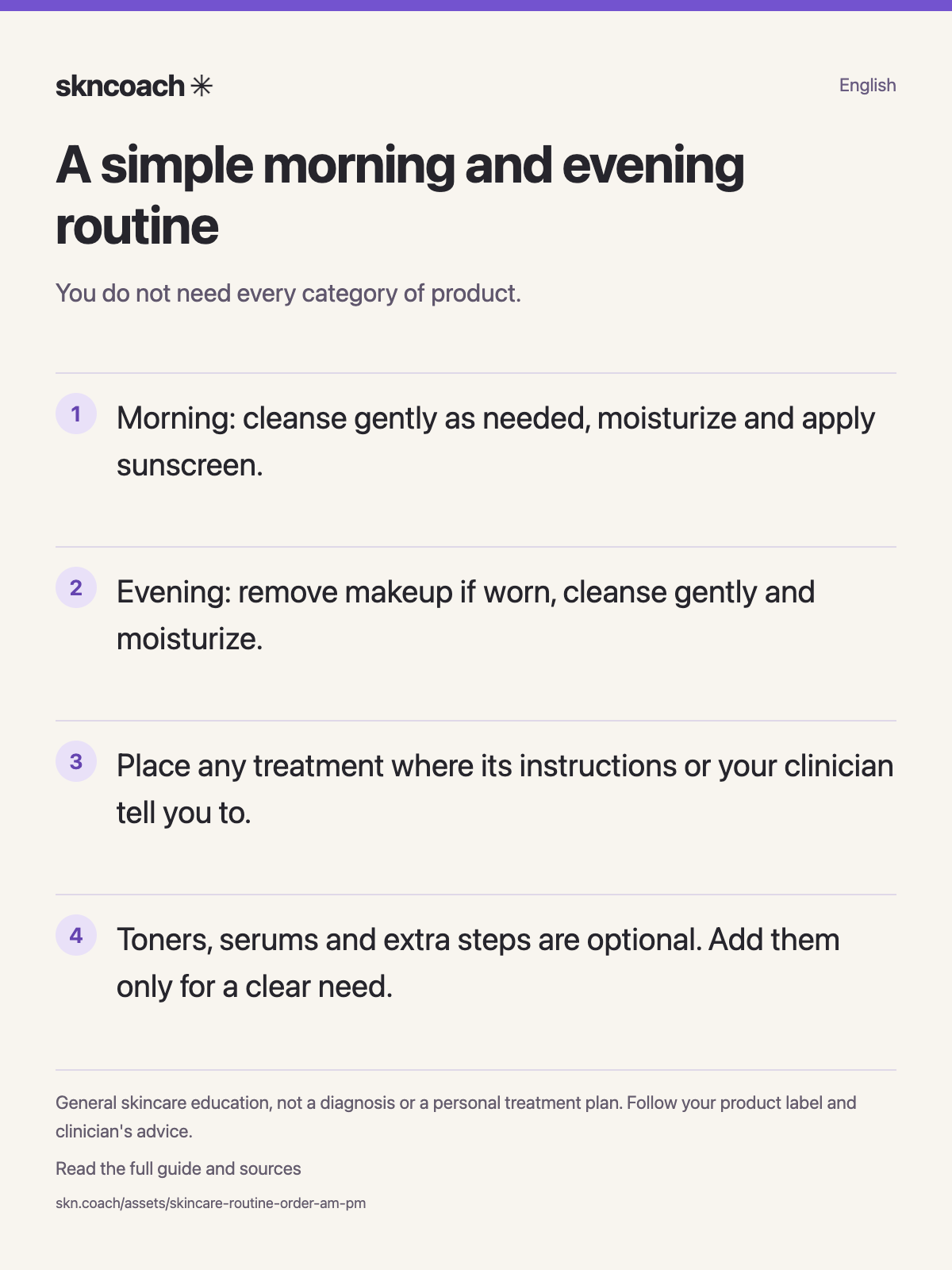
A basic skincare routine has 3 steps: cleanse, moisturize, and protect with sunscreen (AM only). This covers the essentials—removing dirt, hydrating skin, and preventing UV damage. Most people don't need 10 products. Start simple, then add targeted treatments only if your skin has specific concerns.
Learn routine orderWash your face with a gentle cleanser and wait 30 minutes without applying anything. If your skin feels tight, you're dry. If it's shiny everywhere, you're oily. Shiny T-zone but dry cheeks? Combination. If products often sting or cause redness, you likely have sensitive skin.
Explore skin typesCommon rosacea triggers include temperature extremes, spicy food, alcohol, stress, and harsh skincare. Sun exposure is the most universal trigger. Track your flares to identify personal triggers. A gentle, minimal routine with mineral sunscreen helps most people reduce redness over time.
Read rosacea guideRetinoids may help some skin concerns, but they are not suitable for everyone. Ask a clinician whether one is appropriate and follow the specific product directions. Do not use retinoids during pregnancy; discuss your routine with a clinician if you are planning pregnancy or breastfeeding.
Learn about retinoidsFor daytime sun exposure, use broad-spectrum, water-resistant SPF 30 or higher on all exposed skin. Apply before going outdoors and reapply at least every two hours outdoors, and after swimming, sweating or towel drying, following the label. Two finger lengths are a rough guide, not a fixed teaspoon measure.
Sunscreen guideFirst, control active acne—new breakouts cause new scars. For existing scars, options range from at-home (retinoids, vitamin C) to in-office (microneedling, lasers, TCA CROSS). Atrophic scars (pits) usually need professional treatment. PIE/PIH (red or dark marks) often fade on their own with sun protection.
Acne scar treatmentsCommon irritants: fragrance, alcohol (denat.), essential oils, menthol, witch hazel, and strong exfoliating acids. Start with fragrance-free, minimal-ingredient products. Patch test new products on your inner arm before using on your face. Introduce one new product at a time.
Sensitive skin guideCompatibility depends on the complete formulas, directions and your skin. Retinol and vitamin C products may irritate some people when used together. Follow product directions and ask a clinician about combining treatments; a universal timing rule does not apply to every formula.
Layering guideTargeted guides for specific skin concerns
Rosacea & Redness
Calm flushing, reduce redness, and build a gentle routine for sensitive skin
Acne & Breakouts Coming Soon
Clear breakouts, prevent new ones, and avoid scarring with proven ingredients
Fungal Acne
Identify and treat malassezia folliculitis with safe products
Dark Circles & Under-Eye
Understand what causes dark circles and what actually helps
Pigmentation Coming Soon
Fade dark spots, prevent new marks, and even out skin tone
Address visible skin issues and textures
Master the fundamentals of skincare
Routine Order & Layering
Learn the right order, avoid conflicts, and build an effective routine
Sunscreen & Sun Protection
Everything about SPF, application, and protecting your skin daily
Retinoids
Understand retinoid options, product directions, and signs of irritation
Ingredients Library Coming Soon
How to use specific ingredients: when, why, and what to avoid
Advanced treatments and skin identification
Interactive Tools & Quizzes
Build your routine, test your knowledge, and get personalized guidance
Cheat Sheets & Downloads
Free infographics to save, print, or share
Get a routine made for you
Learning is great—but your skin is unique. Get an AI-powered skin analysis and a routine personalized to your concerns, for free.