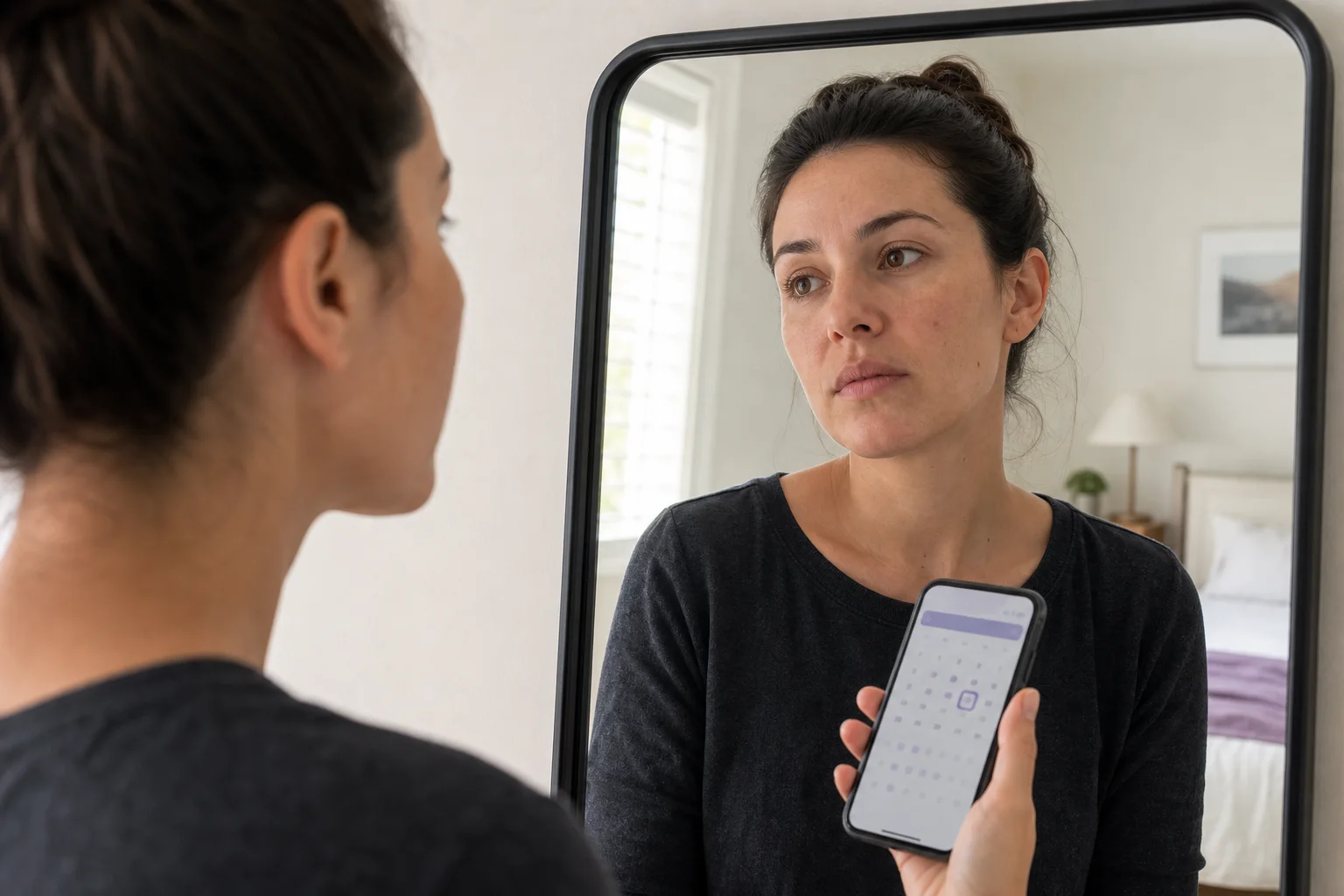
A sunscreen can meet your protection needs and still feel too shiny, dry, or heavy for your daily routine. If you have acne, that can turn a simple purchase into a long series of trials. Start with protection, then compare the whole formula and how it fits your skin and treatment plan.
There is no single best texture or ingredient list for every person with acne. Non-comedogenic and oil-free labels can help narrow the choice, but they do not promise zero breakouts. A new spot also does not, by itself, prove that your sunscreen caused it.
At a Glance
- Protection first: Look for broad-spectrum SPF 30 or higher and water resistance appropriate to your activities.
- Useful starting labels: Non-comedogenic, meaning designed to be less likely to clog pores, and oil-free.
- Compare the whole formula: Gel, fluid, cream, mineral, and chemical categories do not predict everyone’s response.
- Keep your treatment plan: Sunscreen is not an acne medicine; follow the exact directions for prescribed treatments.
- Use it properly: A comfortable finish should not depend on applying too little or replacing a full application with a quick dusting or mist.
This guide belongs to Sunscreen & Sun Protection. For treatment questions, start with the Acne & Breakouts Guide.
Why Sun Protection Still Matters
Sun protection helps reduce UV exposure while you manage acne. It is also relevant to dark marks left after spots. The American Academy of Dermatology’s sunscreen-selection guidance recommends broad-spectrum SPF 30 or higher, water resistance, and non-comedogenic options for acne-prone skin. A tinted product may also be useful when visible light contributes to dark marks.
Sunscreen does not fill pitted scars, diagnose a new bump, or replace an acne treatment. Do not select a sunscreen because a marketing claim implies its zinc, niacinamide, or botanical extract will clear your acne. Keep the main job of each product clear when you review your routine.
Acne medicines differ. Some have specific sunlight, irritation, or application warnings. Check your exact product’s leaflet and ask the prescriber or pharmacist how to combine it with daily protection. Do not assume every acne ingredient has the same effect on sun sensitivity, or that a higher SPF cancels a medicine warning.
Is the Problem Breakouts, Discomfort, or Finish?
These are different questions. Write down what you notice before deciding what to change.
| Observation | Useful question | What it cannot prove |
|---|---|---|
| More spots after a new sunscreen | What else changed, and when did the spots appear? | That sunscreen is the only cause |
| An oily or shiny finish | Can I use the full labelled amount comfortably? | That shine itself means clogged pores |
| Stinging, itching, or a rash | Does the suspected product need to be stopped and assessed? | That this is ordinary acne or a normal adjustment |
| Pilling under makeup | Which layers and application directions are involved? | That the sunscreen’s ingredients are comedogenic |
| Tightness or flaking | Is my routine or acne treatment too irritating or drying? | That all sunscreen needs to be removed from the routine |
If you develop painful deep spots, scarring, a persistent rash, or acne that is not improving, get professional advice. The AAD’s acne guidance for darker skin tones highlights the value of treating acne and avoiding irritating DIY approaches that can leave marks. Do not wait for a product-shopping experiment to solve a problem that needs treatment.
Reading Labels Without Treating Them as Guarantees
Non-comedogenic and oil-free
These are useful search terms, including for sunscreen, moisturizer, and makeup. However, a non-comedogenic label is not a guarantee that no individual will develop spots while using a product. Evaluate the finished formula and your experience rather than treating a label as a diagnosis or a universal promise.
Oil-free also does not mean the product removes your skin’s oil or replaces moisturizer. If your acne treatment leaves you dry, choosing only the most matte products may make the routine uncomfortable. The AAD explains that moisturizer can help skin tolerate drying acne medicines.
Fragrance, known allergies, and treatment ingredients
If you have been told to avoid a specific allergen, use that advice when reading the full ingredient list. Fragrance-free options may be worth considering if products irritate you. Do not add several treatment ingredients just because they appear as extras in a sunscreen.
Ask whether a combined product has separate acne-treatment directions as well as sunscreen directions. If it does, both matter. A sunscreen containing salicylic acid is not automatically interchangeable with a treatment your clinician prescribed.
Ingredient-rating websites
A number beside an ingredient is not a test of the bottle in your hand or of your skin. Do not automatically reject every silicone, oil, butter, or cream based on a list that promises to predict clogged pores. For a suspected reaction, save the actual label and tell the clinician which complete products you used.
A useful comparison sheet can be simple: protection label, price for the quantity, feel at the full application amount, compatibility with your routine, and any symptoms. It does not need a score that claims to calculate your acne risk.
Comparing Textures
| Format | Why you might consider it | What to check in practice |
|---|---|---|
| Gel or light fluid | You prefer a less rich feel | Whether the full application stings, dries, shines, or spreads evenly |
| Lotion or cream | Your skin is dry or your treatment makes it uncomfortable | Whether it feels manageable and works with your other products |
| Tinted sunscreen | You want a tint or additional visible-light protection for dark marks | Shade match, protection label, and whether you can use the required amount |
| Stick | You value portability or controlled application | The directions for enough product and complete coverage |
| Powder or spray | You are considering a particular format for convenience | Whether you can follow its full directions; a casual dusting or mist is not a measured application |
A fluid is not automatically invisible, and a cream is not automatically pore-clogging. Body and face labels can be helpful for intended use, but do not establish a universal texture rule. Read the bottle’s directions and warnings for the area where you intend to apply it.
For oily skin, the AAD suggests gentle cleansing, oil-free and non-comedogenic products, and sun protection. Those are starting points. You can prefer a natural or matte finish without interpreting every bit of shine as evidence of skin damage.
Mineral or Chemical Sunscreen?
Either category may work in an acne routine. Mineral sunscreens use zinc oxide, titanium dioxide, or both; chemical formulas use other UV filters, and hybrids combine them. What matters is the finished product’s protection, directions, tolerance, and whether you can apply it consistently.
Do not assume mineral sunscreen cannot enter pores, that chemical filters cause acne by making heat, or that zinc turns a sunscreen into an acne treatment. The AAD sunscreen FAQ explains that all these types absorb UV, with mineral formulas also reflecting some rays. The category alone does not settle how a particular formula will feel on your face.
If sunscreen repeatedly stings, review the skin-stinging guide and consider professional advice. Repeated burning should not be treated as a necessary step toward finding an acne-friendly product.
Applying Sunscreen in an Acne Routine
Keep medicine directions first
If a prescribed treatment belongs in the morning routine, use it as directed. Some products have instructions about clean or dry skin, order, and other skincare. Ask your pharmacist or prescriber if those instructions are unclear rather than building a generic waiting schedule around every treatment.
Moisturize when needed
A hydrating sunscreen may be enough for some people; others need a separate moisturizer, particularly with drying treatments. Judge comfort and your care plan. Do not skip moisturizer solely because you have acne, and do not add it automatically if the combined product already meets your needs.
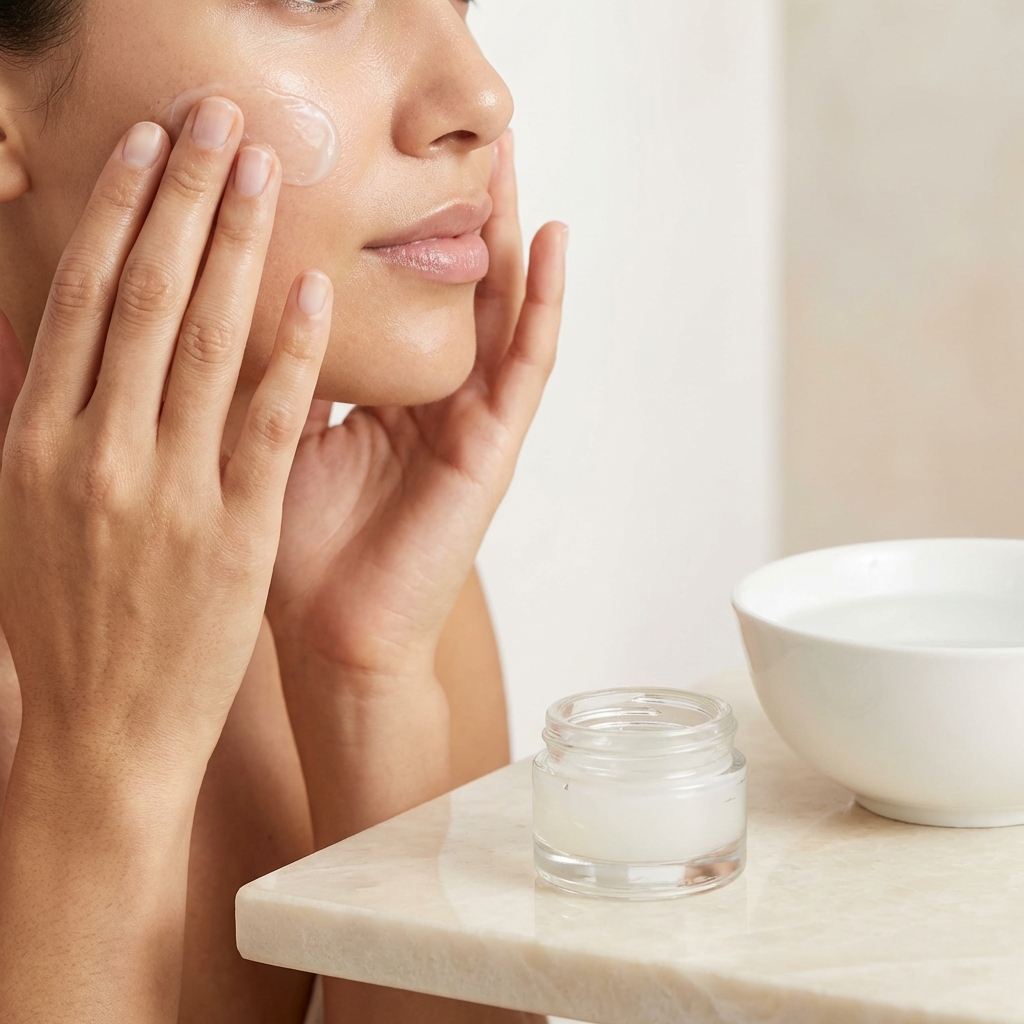
Apply the full amount evenly
Use your sunscreen’s directions for the area being covered. A two-finger shortcut is not a universal measured dose for every nozzle, product, face, and neck. Do not reduce the amount to make a shiny formula look matte. Compare a different suitable formula if the labelled application is unmanageable.
Follow its instructions for applying before sun exposure and reapplying. Spread gently rather than repeatedly scrubbing active spots. Keep sunscreen out of the eyes and avoid applying it to broken skin when the label warns against that use.
Add makeup without relying on it for missing coverage
Let the sunscreen settle according to its directions before applying makeup gently. There is no universal two-minute rule that proves coverage is complete. If it pills, review optional layers and application technique. Do not count a few remaining streaks as the intended protection.
A Practical Morning and Evening Plan
Morning
- Cleanse gently as needed.
- Follow the directions for any morning acne medicine.
- Add a tolerated moisturizer if your skin needs it.
- Apply sunscreen as directed, then makeup if wanted.
- Take a hat and make a realistic reapplication plan for time outdoors.
Evening
- Remove sunscreen and makeup gently with a suitable cleanser.
- Add a separate removal step only if needed; double cleansing is not mandatory.
- Follow your agreed acne-treatment plan.
- Use a tolerated moisturizer and note significant changes or irritation.
Reapplication Without a False Shortcut
The FDA advises reapplying sunscreen at least every two hours and more often when swimming or sweating. Follow the exact label, including towel-drying directions. A high SPF does not remove this need.
If makeup or shine makes reapplication awkward, plan a way to apply the full amount rather than quietly reducing it. You may choose to adjust or remove makeup when needed. A powder brush, cushion tap, or quick spray cannot be assumed to provide the labelled SPF without the required dose and coverage.
Do not spray sunscreen directly onto your face or inhale it. A water-resistant label describes tested protection under specified conditions; it does not mean waterproof, all-day coverage. Reapplication is about restoring protection, not about proving that a product cannot cause breakouts.
Common Mistakes
Changing five products at once. If the routine changes completely, it becomes harder to describe what happened. Keep useful notes and change optional cosmetics thoughtfully; medicine changes belong with the prescriber.
Treating every new bump as a sunscreen reaction. Acne has more than one influence. Timing can guide a discussion but cannot identify the cause by itself.
Scrubbing until the face feels squeaky. Removing sunscreen does not require making skin sore. If your cleanser cannot remove it comfortably, review the removal method rather than increasing friction.
Assuming heavier always means worse. Some acne treatments make skin dry. A comfortable cream may fit one person better than a drying gel; evaluate the whole routine.
Promising yourself zero breakouts from a label. A label helps narrow choices. It cannot replace care for ongoing acne or certify how your skin will respond.
FAQ
Can sunscreen cause breakouts?
Some people find that particular products worsen their acne, but a new spot does not prove causation. Non-comedogenic options are a useful starting point. Seek advice for persistent or worsening acne rather than repeatedly switching everything.
Must I avoid every oil or silicone?
No single ingredient list can predict every person’s response to a finished formula. Follow any known allergy advice, consider acne-friendly product labels, and judge the complete product rather than an isolated ingredient score.
Can I skip moisturizer?
Possibly, if the sunscreen is moisturizing enough and your skin remains comfortable. If treatment causes dryness, a separate moisturizer may help. Keep your medicine directions and any clinician advice in mind.
Is SPF 50 an acne treatment upgrade?
No. SPF describes sunburn protection, not acne-treatment strength. Choose suitable broad-spectrum protection and use it properly; a higher number does not replace acne care or reapplication.
What if I still dislike every sunscreen?
Work out whether the problem is finish, irritation, or ongoing acne. Bring that distinction and your product list to a dermatologist or pharmacist. Keep shade, clothing, and a hat in the plan while finding an option you can use.
What to Read Next
- Sunscreen & Sun Protection Guide
- Sunscreen Pilling & Texture Fix
- Acne & Breakouts Guide
- How Much Sunscreen to Apply on Face
Keep your comparisons in one place: Use skncoach’s product tracker to organize the products you use. It cannot diagnose the cause of a breakout or guarantee a formula will suit you.
This guide provides general information, not a diagnosis or an individual treatment plan.