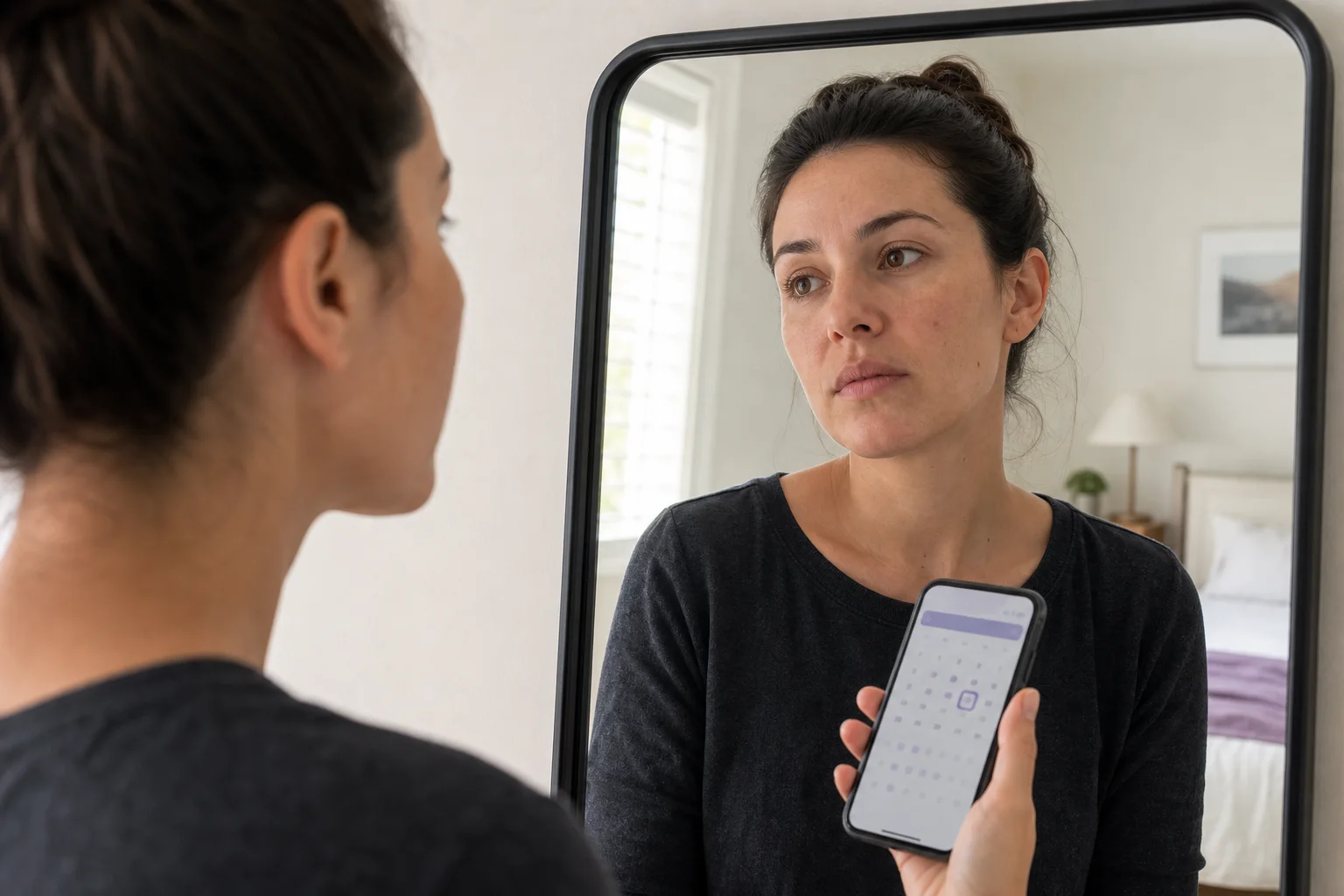
A serum stings as soon as you apply it. Your moisturizer now burns when it used to feel fine. It is reasonable to take that discomfort seriously, but the sensation alone cannot tell you the cause.
A short tingle is not proof that a product is working, and a two-minute timer cannot decide whether a reaction is harmless. This guide helps you respond to symptoms, record the useful details and know when to seek care.
At a Glance
- Do not push through: An uncomfortable reaction is a reason to review the product, not evidence of benefit.
- Avoid self-diagnosis: Irritation, allergy and skin conditions can overlap.
- Keep medicines separate: Follow the leaflet and contact your prescriber or pharmacist about a reaction.
- Simplify optional care: Avoid another active or a deliberate retry to prove which ingredient caused it.
- Know urgent signs: Breathing difficulty, major swelling, severe pain or eye symptoms need prompt help.
Start here → Skin Barrier & Sensitivity Hub for related guides.
What to Do When a Product Burns
Stop applying an optional cosmetic that appears to cause a reaction. If it is still on your skin, gently remove it according to the product directions. Avoid scrubbing, another exfoliant or a homemade mixture intended to neutralize it.
If a medicine is involved, follow the patient leaflet and contact your prescriber or pharmacist for advice. The appropriate response depends on the product and the symptoms. This article does not supply a blanket instruction to stop every treatment or restart it at a lower dose.
Seek emergency help for breathing difficulty, faintness or swelling of the lips, tongue or throat. Severe or rapidly worsening pain, extensive blistering, marked swelling, discharge, fever or feeling unwell needs urgent assessment. Eye pain or a change in vision also needs prompt care.
Do not wait for a skincare reset to finish before getting help with serious symptoms.
Why It Might Be Happening
Irritation from a product or routine
A formula, the way it is used or the combination with other products can be irritating. More frequent application, extra exfoliation, vigorous cleansing or a recent procedure can all be useful details to mention.
This does not mean that every reaction comes from “using too much.” A product may be unsuitable even when you followed its directions. Keep the packaging so you can review the exact formula rather than relying on the ingredient advertised on the front.
Contact allergy
An allergy is another possible explanation. A familiar product is not automatically excluded, and symptoms do not have to follow a simple immediate-versus-delayed rule.
The NHS explanation of contact dermatitis distinguishes irritants from allergens. A clinician may need more history or testing to identify the cause. Do not use a reaction’s timing as a home allergy diagnosis.
A skin condition or already irritated skin
Eczema, rosacea and other conditions can change how skincare feels. Symptoms such as dryness, tightness, flaking or a rash deserve assessment when they persist or recur.
Moisturizer stinging is not a specific test for a damaged barrier. A shiny face or several uncomfortable products cannot diagnose the cause either. The barrier guide explains how to organize a routine review without assuming the answer.
Is Any Tingling Normal?
Some product or medicine information describes possible irritation. That does not allow a general website to classify your own sensation as harmless from its duration alone.
You do not need to feel an acid, vitamin C or retinoid working. A sensation can vary with the formula, area and condition of the skin. Lack of visible redness also does not establish that everything is fine, particularly when changes are less obvious on darker skin.
Read the warnings and ask about symptoms that concern you. Avoid increasing the amount to create a tingle or continuing a painful product because someone says that discomfort means effectiveness.
Record the Details That Help
| Detail | What to write down |
|---|---|
| Product | Exact name, formula, strength and whether it is a medicine |
| Use | Amount, frequency, application area and whether it was rinsed off |
| Timing | When the reaction started and whether it continues between applications |
| Symptoms | Burning, itching, pain, swelling, flaking, rash or changes in colour |
| Other changes | New skincare, medicines, shaving, procedures, weather or work exposure |
| Current course | Better, worse, recurring or spreading |
Include the whole routine. The final product applied is not automatically the cause, and an ingredient shared by two products is not proof of an allergy.
Photographs can help show change, especially if you use similar lighting. They do not measure barrier function or replace an examination. Take a useful record rather than repeatedly testing or manipulating the area for a clearer picture.
Do Not Deliberately Rechallenge a Reaction
Stopping a product for three days and applying it again to “confirm” the cause can provoke another reaction. Do not repeat a product associated with significant symptoms without professional advice.
A forearm trial cannot tell you that a facial reaction is definitely barrier damage. Different areas can respond differently, and a quiet test area does not rule out a problem elsewhere.
The AAD’s cosmetic-testing guidance can help with ordinary new products before a reaction has occurred. It is not permission to ignore a medicine leaflet, repeatedly test a peel or retry a suspected allergen. Medical patch testing is a separate clinical process used to investigate some contact allergies.
Keep the Surrounding Routine Simple
Morning
Cleanse gently if needed, using lukewarm water and a tolerated cleanser. Avoid rubbing with a brush or cloth. Use a moisturizer that feels comfortable and fits any treatment advice you have received.
Plan sun protection with shade, clothing and broad-spectrum SPF 30 or higher sunscreen as directed. If sunscreen also causes a reaction, ask for help finding a suitable option. Neither a mineral filter nor a “sensitive skin” label guarantees comfort.
Evening
Remove sunscreen and makeup gently, then use your tolerated moisturizer as needed. Extra toners, essences, serums and sleeping masks are optional. They do not need to be added to complete a repair routine.
Keep prescribed products within the plan agreed with your clinician. Ask where moisturizer belongs if the application order is unclear. Do not cover a medicine with a thick ointment layer or change its dose on your own to make it feel gentler.
Choosing an Alternative Product
Fragrance-free formulas may be worth considering, especially when fragrance has been a problem before. “Natural,” “clean,” “hypoallergenic” and “for sensitive skin” do not establish that a product cannot cause a reaction.
A shorter ingredient list is not automatically safer, and preservatives are not a group you should automatically avoid. The cause of your reaction matters more than a generic blacklist.
The NHS treatment guidance notes that moisturizers can themselves irritate skin. Stop a moisturizer that causes a reaction and ask a pharmacist about alternatives. You do not have to keep using it because its label promises soothing or barrier repair.
Returning to Optional Actives
There is no fixed number of symptom-free days that makes every product suitable again. First consider whether the product is necessary and whether you understand the reaction.
If symptoms persist, recur or may represent an allergy, get advice before another trial. When an optional cosmetic is appropriate, follow its directions and change one part of the routine at a time. Medicine restarts belong with the prescriber and product information.
Read How to Introduce Actives for a checklist that does not rely on a universal escalation calendar.
FAQ
Why does a familiar moisturizer suddenly sting?
Possible explanations include a reaction to the formula, changes in your skin or another condition. The symptom alone does not identify which. Check for changes in the product and routine, stop an optional product that causes a reaction, and seek advice when needed.
Is vitamin C supposed to burn?
Burning is not required for benefit. Follow the exact product directions and take discomfort seriously. Neither a particular concentration nor a short duration proves that the reaction is acceptable.
Can I become allergic after using a product for a long time?
A product you used before can still be relevant to a new reaction. A clinician can help investigate the history. Do not repeatedly apply it to prove or disprove an allergy yourself.
Should I replace everything with a repair range?
Not automatically. Replacing several products introduces more variables and may cost more without clarifying the problem. Start with the actual symptoms and the care you tolerate, and ask for advice if you cannot use ordinary products comfortably.
Can a skin scan identify the cause?
No. You can record your routine and observations, but an app cannot diagnose irritation, allergy or a skin condition. Use the record to support a medical discussion when symptoms need assessment.
Related Guides
- Skin Barrier & Sensitivity Hub
- Over-Exfoliated Skin: What to Do Next
- How to Repair Your Skin Barrier
This guide provides general information and does not replace individual medical advice.