Retinoids: Tretinoin, Adapalene & Retinol
Learn how topical retinoids differ, what to ask before starting one and how to discuss unwanted effects. The right plan depends on the condition, the exact product and your circumstances.
What's your retinoid situation?
Choose a topic to find a guide. This quiz cannot diagnose a reaction, select a medicine or set its dose.
Where are you in your retinoid journey?
Start with the Basics
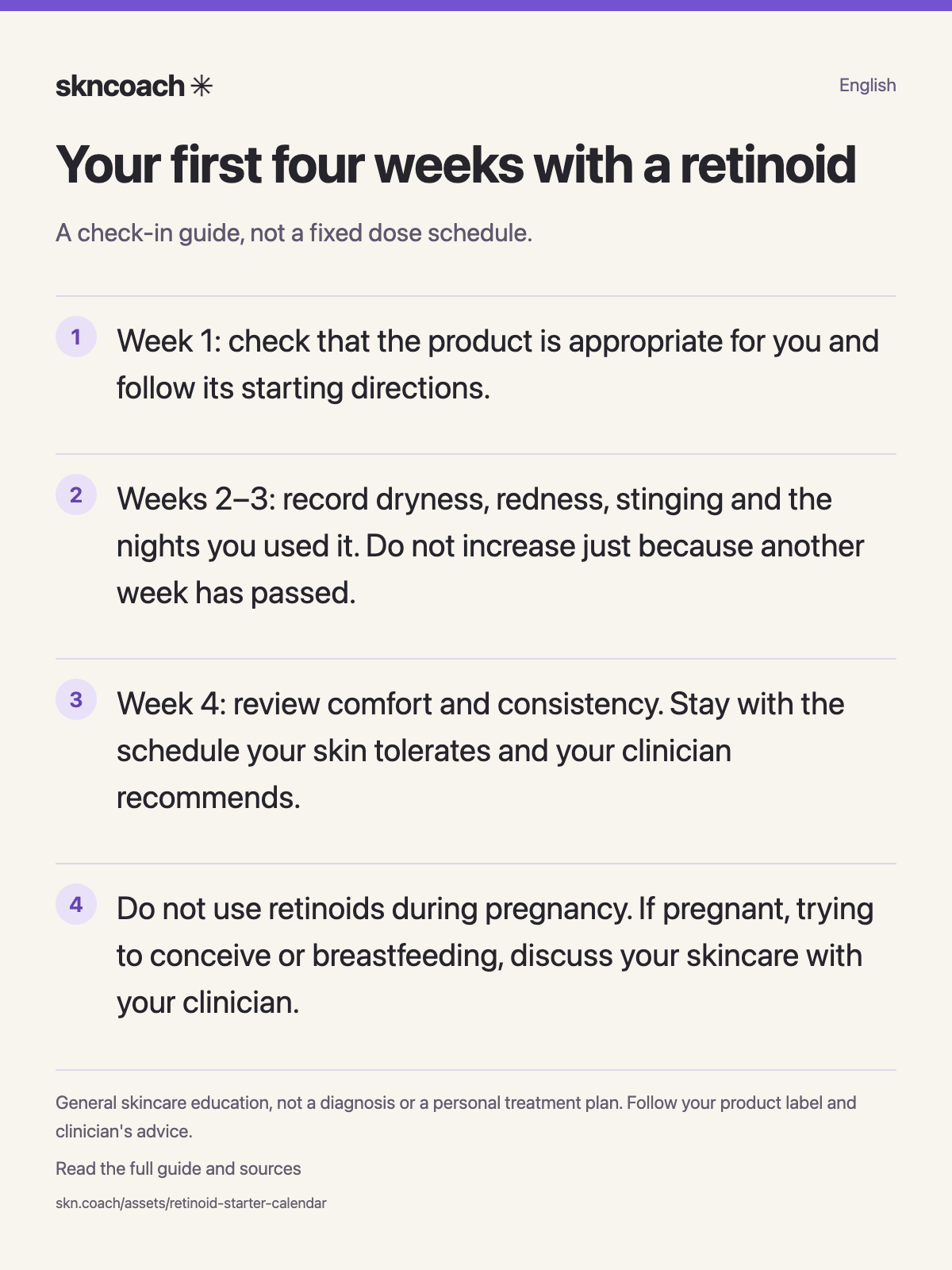
Before starting, check whether a retinoid is appropriate for your concern. Ask a pharmacist or clinician about the exact product, local access rules, other medicines and pregnancy plans. Follow its directions rather than a universal starting schedule.
Read: How to Start AdapaleneBarrier Repair Mode
Burning, stinging or raw skin needs attention. Follow the product warning instructions and contact your prescriber about a reaction. A quiz cannot decide the cause, how long to pause or when to restart a medicine.
Read: Barrier Repair ProtocolPurging vs. Breakout
New or worsening bumps cannot be classified from their timing or location alone. Seek advice for persistent, painful or worsening symptoms; do not assume severe symptoms are a phase you must push through.
Read: Purging vs BreakoutOne Active at a Time
Adding optional active products can increase irritation. Ask how they fit your exact treatment, follow labels and change one thing at a time. There is no universal waiting period or morning-versus-night rule for every combination.
Read: Retinol + Acids GuideAll Guides & Resources
Everything you need to master retinoids.
Getting Started
Managing Side Effects
Cheat Sheets & Downloads
Free infographics to save, print, or share
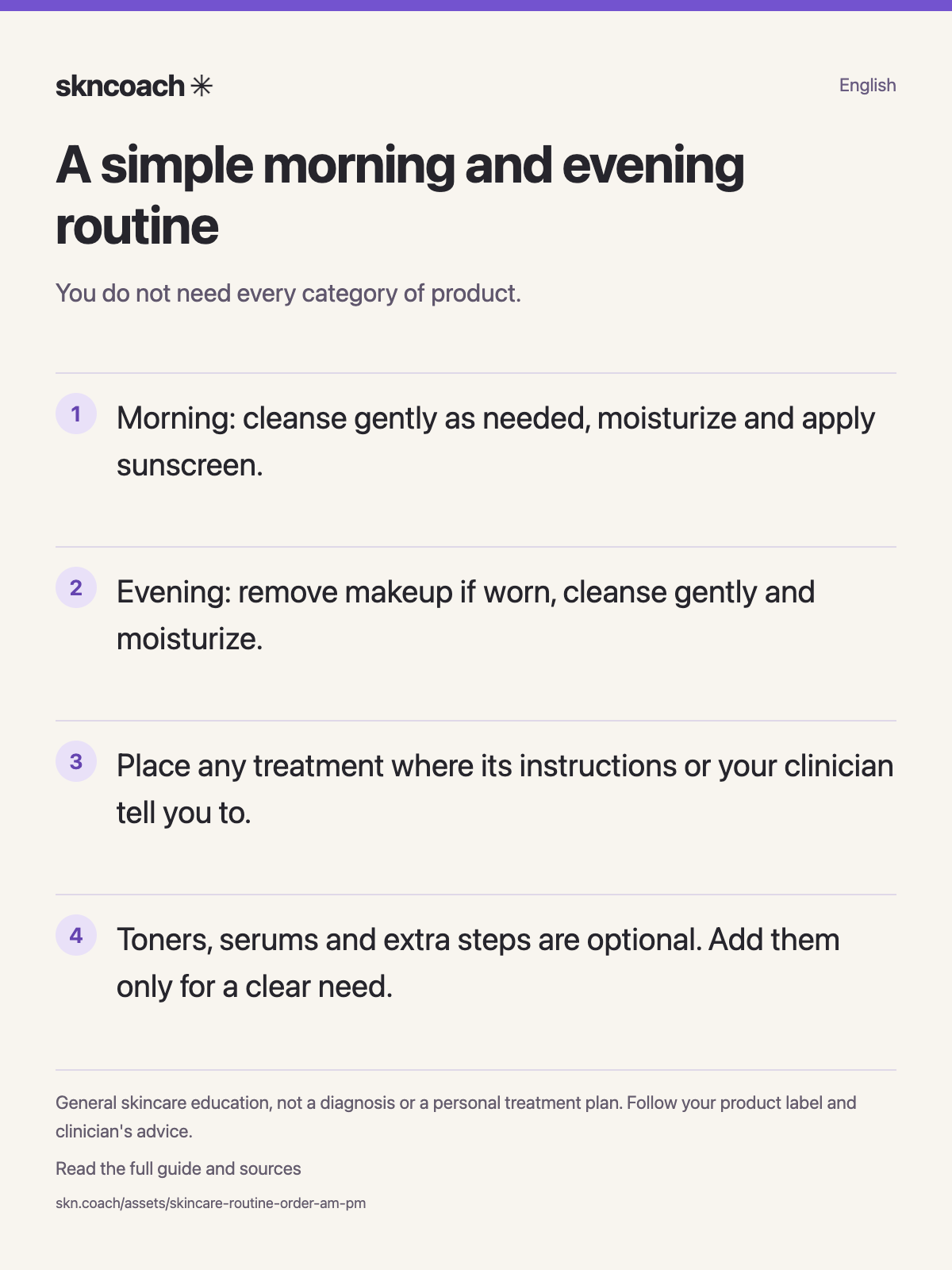
Starter routine
How to structure your routine around retinoid use.
Retinoid Nights
- 1 Cleanse — gentle, non-stripping cleanser
- 2 Check application timing — follow any drying or waiting instructions for your product
- 3 Moisturizer — ask where it fits around your medicine
- 4 Retinoid — use the directed amount and treatment area; keep away from eyes and mucous membranes
- 5 Additional layers — do not add an occlusive over medicine without checking that it fits your instructions
Off-Nights & AM
- 1 Gentle cleanse — no actives, no exfoliation
- 2 Optional hydration — a separate serum is not required; use only products you tolerate
- 3 Moisturizer — focus on barrier repair
- 4 Sunscreen (AM) — SPF 30+ daily, non-negotiable
Retinoid Cheat Sheet
Compare the exact product and purpose. Percentages across different retinoids are not a universal strength scale.
Tretinoin (Retin-A)
In the US, tretinoin is a prescription medicine. Uses and instructions differ by formulation; your prescriber selects the strength and plan.
Tazarotene
A prescription retinoid in the US, with product-specific uses such as acne or psoriasis. Ask a clinician about suitability and precautions.
Adapalene (Differin)
Used for acne. Some US products are nonprescription and others require a prescription. Check local access, age limits and the exact label.
Retinaldehyde
Also called retinal. Found in some cosmetic products; concentration, formulation and evidence vary. Its name alone does not predict effectiveness or tolerability.
Retinol
Used in cosmetic skincare. It can still irritate; sensitive skin does not automatically make it an appropriate starting choice.
Retinyl Palmitate
A vitamin A derivative used in some cosmetics. Assess claims for the complete formula rather than assuming every derivative has the same evidence.
What not to do
These mistakes cause the irritation spirals that make people quit.
Inventing your own dose or escalation. More frequent use is not a shortcut. Follow the product or prescriber directions and ask how to handle unwanted effects.
Ignoring product-specific application instructions. Some medicines require a drying or waiting period. Check yours instead of applying one rule to every formulation.
Ignoring sun-exposure precautions. Follow the medicine warnings and use appropriate sunscreen, shade and protective clothing during exposure.
Adding several optional actives together. This can make irritation harder to manage. Ask about combinations and follow the instructions for each product.
Applying outside the directed area. Keep medicine away from eyes, lips and mucous membranes as instructed. Ask about persistent eye dryness or irritation.
Pushing through severe irritation. Follow stop-use warnings and seek advice for significant burning, raw skin or persistent redness. Seek urgent help for a serious allergic reaction.
When to see a dermatologist
Some situations need professional guidance.
- You want prescription-strength tretinoin or tazarotene
- You're experiencing severe or persistent irritation despite proper use
- Breakouts are worsening, painful or leaving scars; do not wait for a fixed week count
- You have rosacea, eczema, or other skin conditions and want to try retinoids safely
- You are pregnant or planning pregnancy: do not use topical retinoids. If breastfeeding, discuss the exact medicine and application area with a clinician
- You want to combine retinoids with other prescription treatments
Common questions
Quick answers to the most-asked retinoid questions.
What's the difference between tretinoin, adapalene, and retinol?
How do I know if I'm purging or breaking out from retinoids?
What is the retinoid sandwich method?
How often should I use retinoids when starting out?
Does it mean it's working if my retinoid stings?
How long before I can tell if a retinoid is working?
What happens to my results if I stop using a retinoid?
Does drinking more water reduce wrinkles?
Which anti-ageing options actually have evidence behind them?
Sources and medicine instructions
These US references explain selected products and general precautions. Check the exact medicine available in your country and your own treatment instructions.
Ready to Start Your Retinoid Journey?
Use our free routine builder to organize basic skincare around your treatment instructions. It cannot prescribe a retinoid or choose its dose or pace.
Build My Routine100% Independent. Always.
We never monetize through brand deals, affiliate links, or ads — so you can trust our recommendations.
Get your personalized routine
A skin scan can help record visible changes and routine notes. It cannot diagnose a reaction or decide whether a retinoid is appropriate for you.